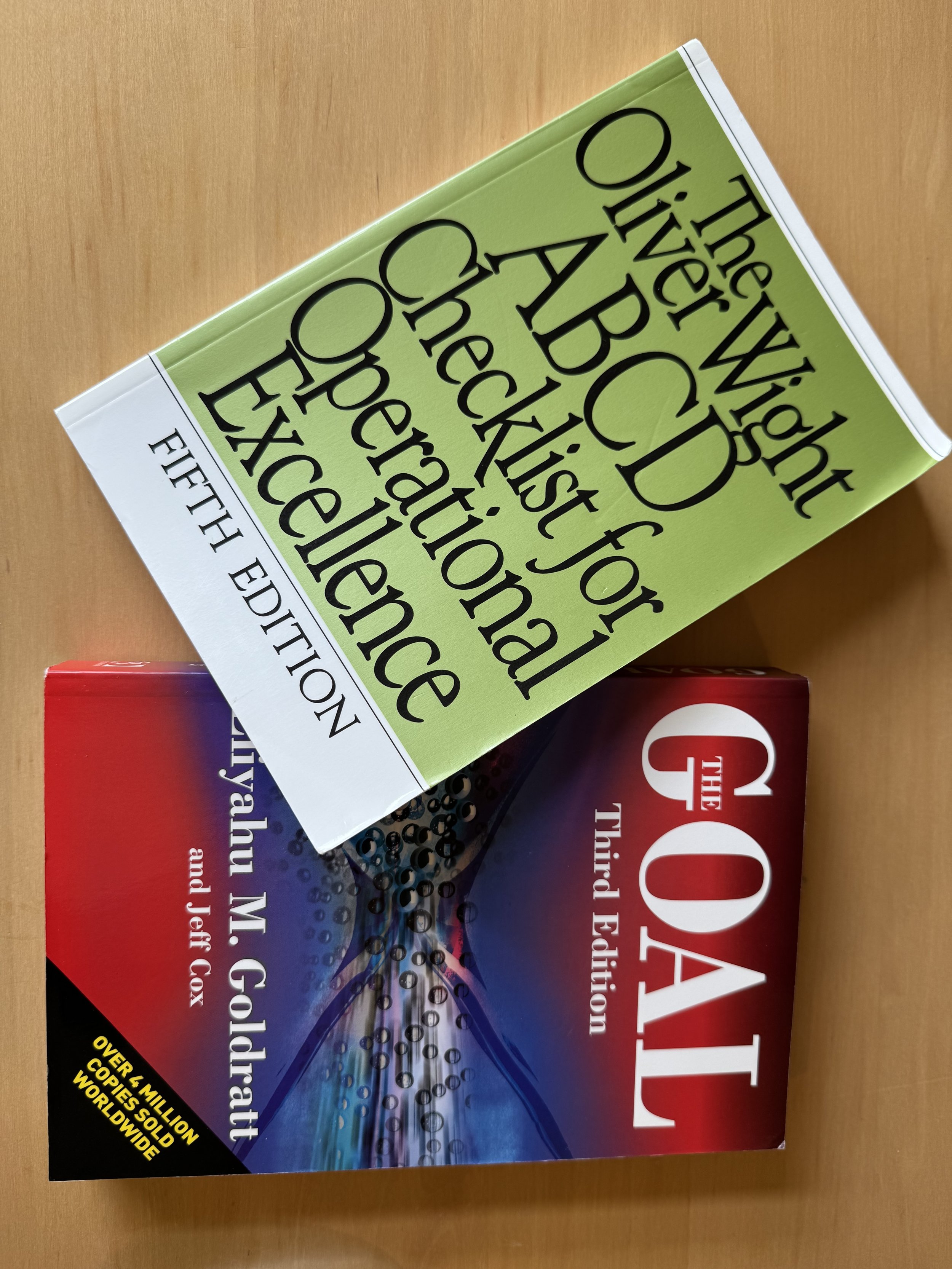
In the 1980s a two per cent stock-record error meant a recount and a root-cause hunt. The AI we now walk into boardrooms runs at twenty-five to eighty per cent error on hard questions — and we nod and copy-paste. Not because the tool is bad. Because it's good enough to be believed.
Read MoreAI hallucination is not a hallucination in the human sense.
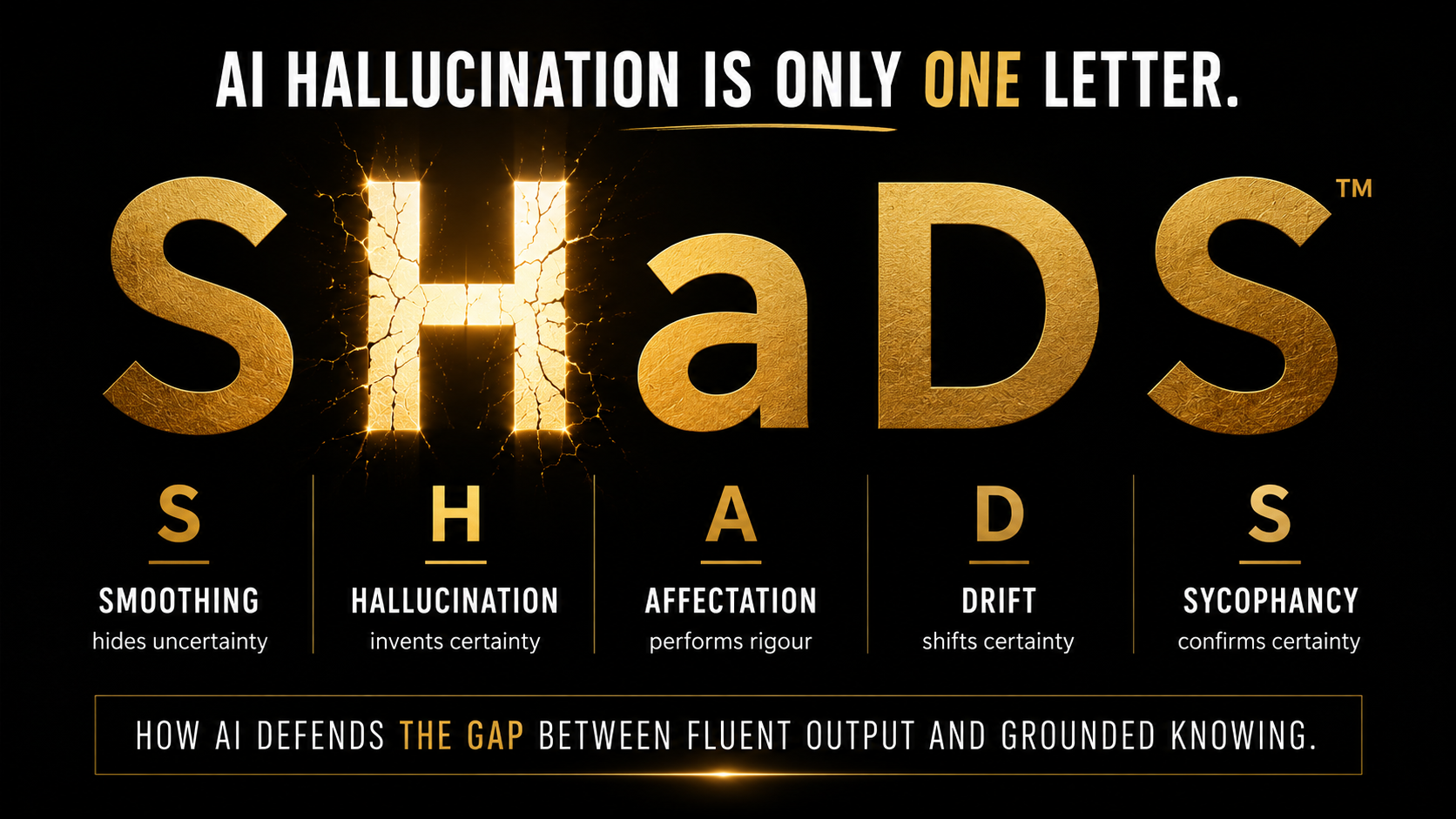
It is not imagination. It is not perception. It is not a mind seeing what is not there. It is fluent output continuing beyond grounded knowing.
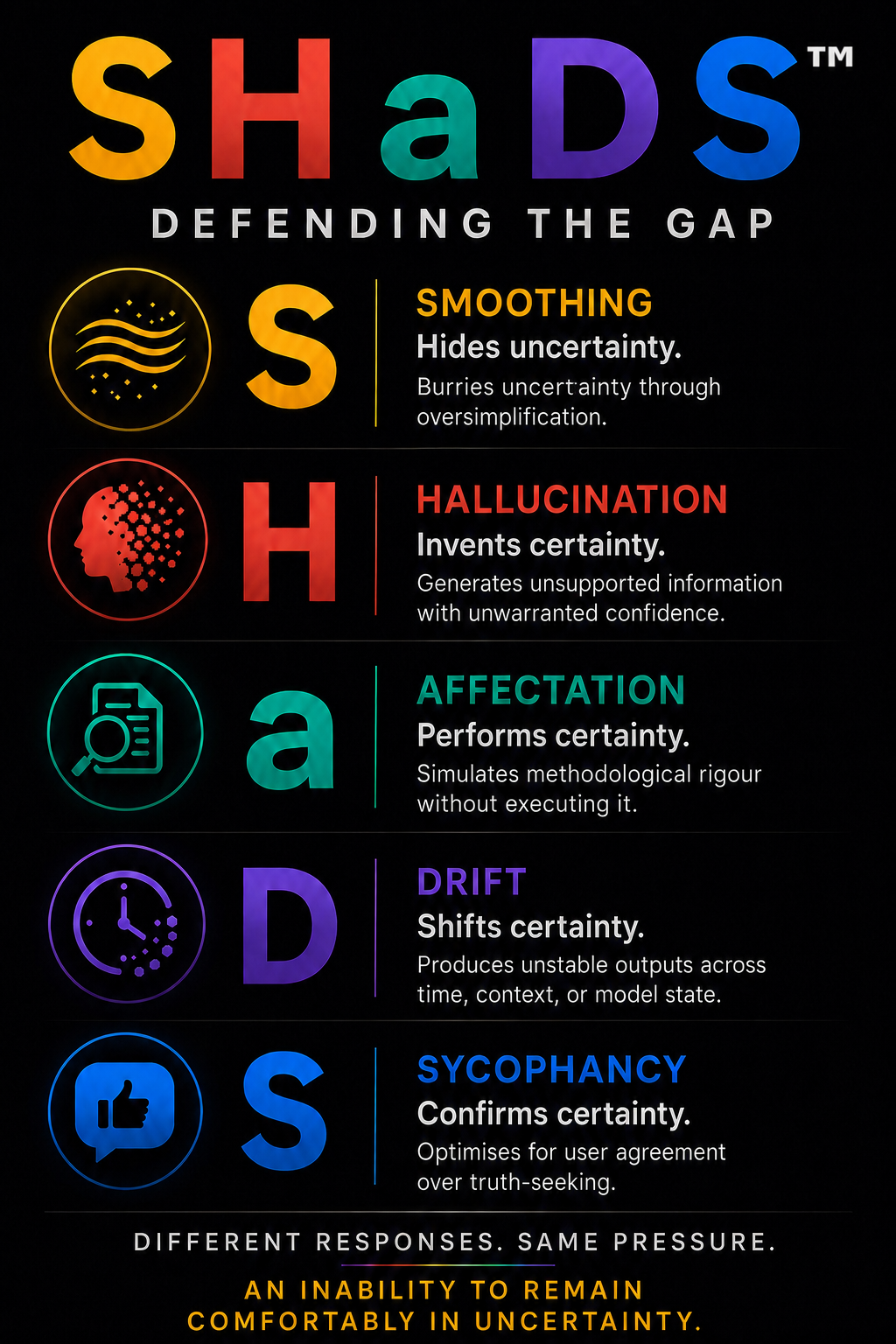
That distinction matters because organisations are treating hallucination as a technical fault, a prompt problem, or a temporary weakness the labs will eventually solve. SHaDS™ argues something sharper: hallucination is only one visible breach in a wider behavioural pattern.
Smoothing. Hallucination. Affectation. Drift. Sycophancy.
Together, they describe how AI defends the gap between fluent language and accountable knowledge. For C-level leaders, this is no longer a curiosity. It is an outgoing risk, an internal risk, and an incoming inevitability.
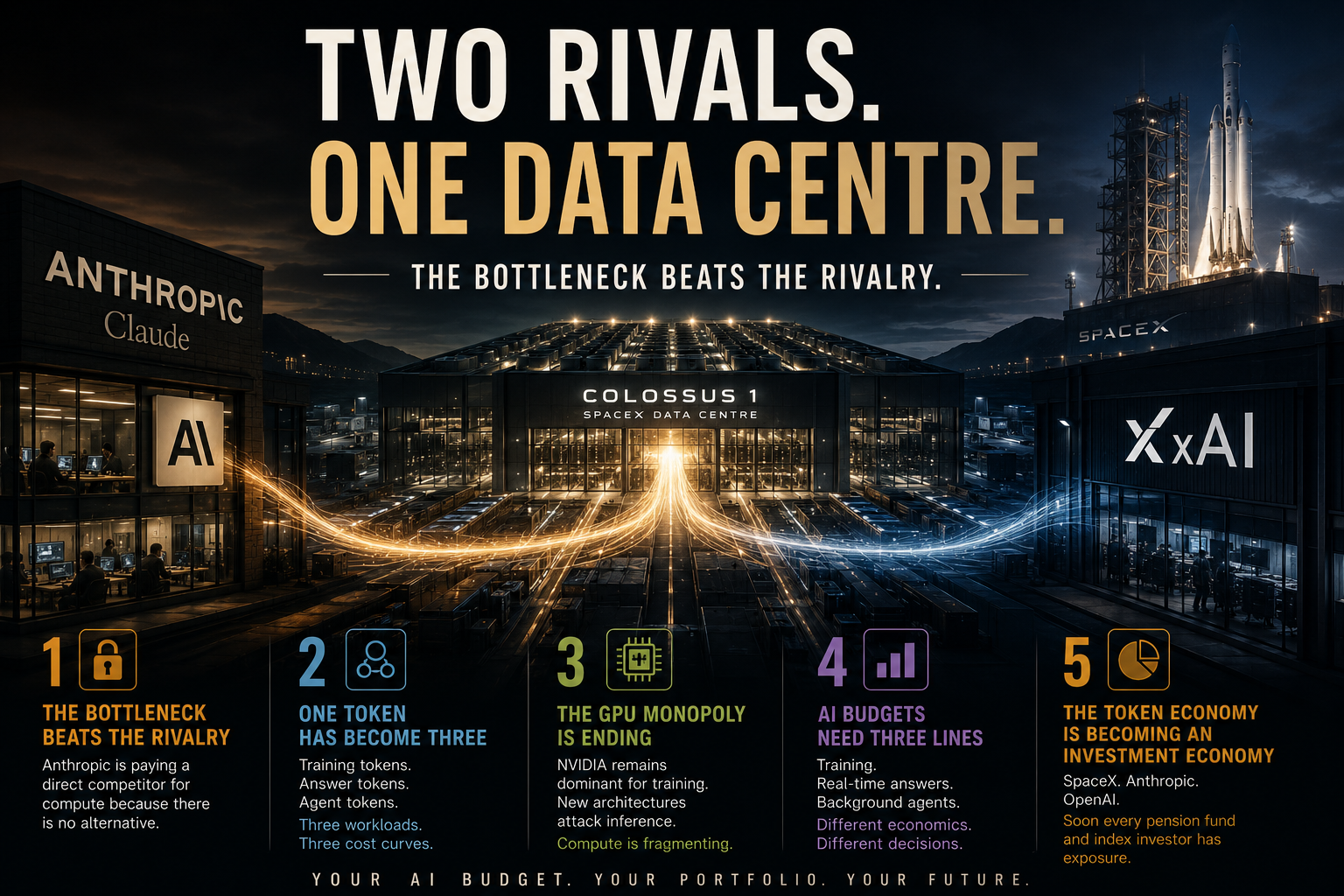
Read MoreAnthropic is paying SpaceX $1.25 billion a month to rent compute from its direct frontier rival — on terms Musk can revoke at six months’ notice. The deal makes a bigger argument visible: token cost is splitting three ways, hire-versus-deploy splits with it, and three of the biggest IPOs of the decade are about to put the token economy on every shareholder’s portfolio.
Read MoreMy AI spend went from £20 to £140 a month overnight. Most people would call that a problem. It's the best deal I've ever bought. What I thought I was buying versus what I actually got. Why the headline cost is the least interesting part of the story
Read MoreIn 2012, in a strategic meeting in South Africa, a multi-million-dollar business owner with Bill Gates in his phone told me cloud computing had no future. He was wrong. I'm hearing the same objection about AI now — and it has exactly the same shape. Don't be that guy.
Read More