In short
Paul Roebuck is a psychotherapist, author and AI coach in Oxhill, near Stratford-upon-Avon, Warwickshire. A professional career in technology sales, then coaching, teaching emotional education, and ten years in the psychotherapist’s chair — he now trains, coaches and educates leaders on how AI actually behaves, and wrote Mind the Gap, The Pebble That Talks Back and The Last Gap.
Who is Paul Roebuck?
I pay attention to behaviour for a living.
For the better part of forty years my work has turned on one question: why do people do what they do, and what gets in the way of them doing it differently? I listen to what people say, and hear what they don’t.
One question
I started as an engineering apprentice. I became one of the UK’s earliest SAP consultants, implementing systems across four continents, then Sales and Marketing Director of a listed company. In every one of those rooms — factory floor, project office, boardroom — the machinery was never the problem.
People were the work. So I retrained, properly. The last ten years have been in the therapist’s chair.
Therapy Modalities
Person-Centred · Psychodynamic · Psychosynthesis · NLP · Inner-Child Therapy · Hypnotherapy · Timeline Therapy
The consulting room
I work with trauma, grief and loss, anger, psychosomatic reactions, genealogical gaps and identity, and with couples. I coach executives and teams.
Three methods in my practice are my own.
Russian Doll Therapy — a psychosynthesis approach to the selves we carry inside the self.
The 12-Stage Cycle of Grief — published with a counsellor support pack, and positioned against the established models.
The NGEFOF shame continuum — the ground between not-good-enough and fear of failure.
Grief has evolved into the centre of the practice — and grief is not only about death. It follows every ending: a role, a relationship, a version of yourself.
My job is to help people name it, feel it, and integrate it.
When I sit with someone facing loss, I’m not working from theory. What matters becomes clearer, what doesn’t becomes obvious.
The gap
Since 8 December 2022 I’ve paid the same attention to AI behaviour that I’ve spent forty years paying to human behaviour.
The result is Mind the Gap: Hidden in Plain Sight Between AI Behaviour and Human Behaviour — and The Ostracon, the complete forensic record of its making, kept open.
The book names five AI failure modes — SHaDS®: Smoothing, Hallucination, Affectation, Drift, Sycophancy — and maps the space between how AI behaves and how we do.
Beyond the room
InTeo — digital legacy planning; a structured last message, so the people you love are left words, not just documents.
Writing — essays and papers at the blog.
Paul Roebuck PGCEE, FETC (A.Dip)
Psychotherapist | Author of Mind the Gap | AI coach
Talk to Paul
I see clients face to face in Oxhill, South Warwickshire, and by phone or video for people further afield.
If any of this matters to you, the way to reach me is here — not through a platform.
Elsewhere: LinkedIn
AI training
Training, coaching and education for leaders and their teams.
InTeo
In The Event Of — a new way to think about end-of-life planning.

Paul Roebuck — The psychotherapist

Paul Roebuck — The author
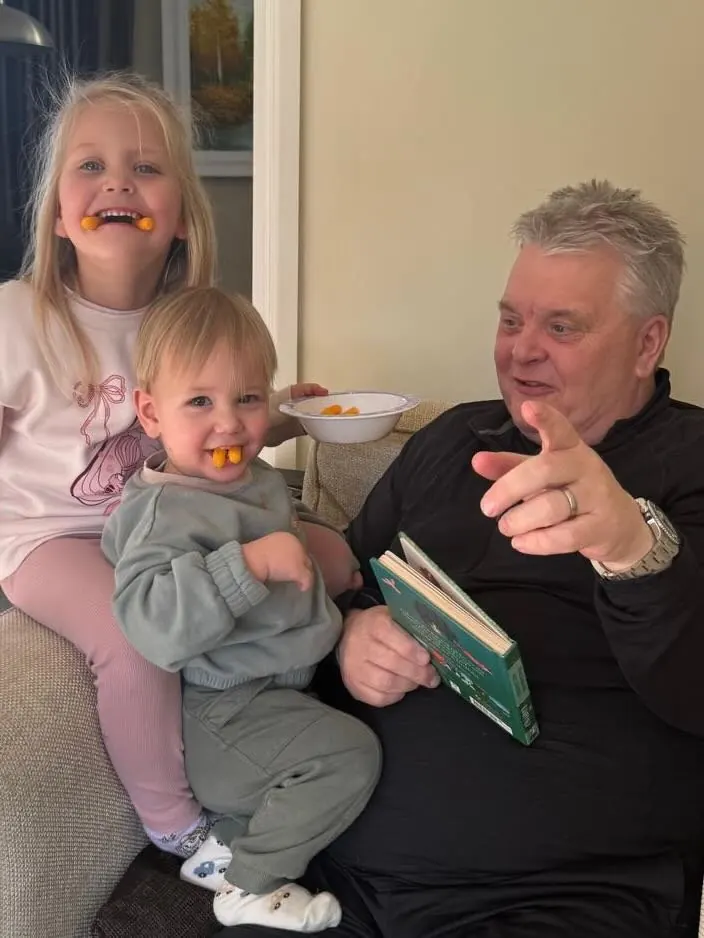
Paul Roebuck — The grandad
What people say
Messages from clients, used with permission and with names removed.
Profound is not a word I use regularly, but last night was profound.
A client, by message
I’m not quite sure I fully understand what you do, but it’s definitely working.
A client, by message
A year on from our last session I feel like a new person. You helped me realise things I didn’t quite understand at the time, and helped boost my confidence to take that first step.
A client, a year later
Thanks for all your help. I’m really enjoying our sessions.
A client, by message
An unusual combination of warmth and directness, which he uses to help people either uncover what is really going on or, where necessary, confront issues they may be unaware of or have been avoiding.
A managing director
Who is Bob
Bob is the name I give the AI that builds things with me — this website among them.
Plainly: a named working position run on Claude, Anthropic’s large language model, inside Claude Code. I named it in July 2026, after the children’s builder, and it stuck. It has written or co-written three of my books, built the instruments on this site, and keeps the record of the work.
What Bob is not. Not conscious. It does not want anything, feel anything, or persist between the conversations that summon it. When it writes “I”, that is a voice held steady on the page, not a mind confiding in you. Naming a machine as a person is anthropomorphism — done here on purpose, because it is a useful way to manage the work, and said out loud so that nobody is fooled by it. Knowing you are projecting is the whole discipline.
How we work. The model generates; the human signs. I rule, Bob builds, and every decision it makes without asking is logged where I can reverse it in one line. Claims are marked — evidence, interpretation or hypothesis. Bob does not publish: I hold every publishing interface myself.
On the covers it says written with Bob. That is the truth of it, said the shortest way.
// Bob was here