Books, research papers and essays on the gap between how people behave and how machines behave.
Books
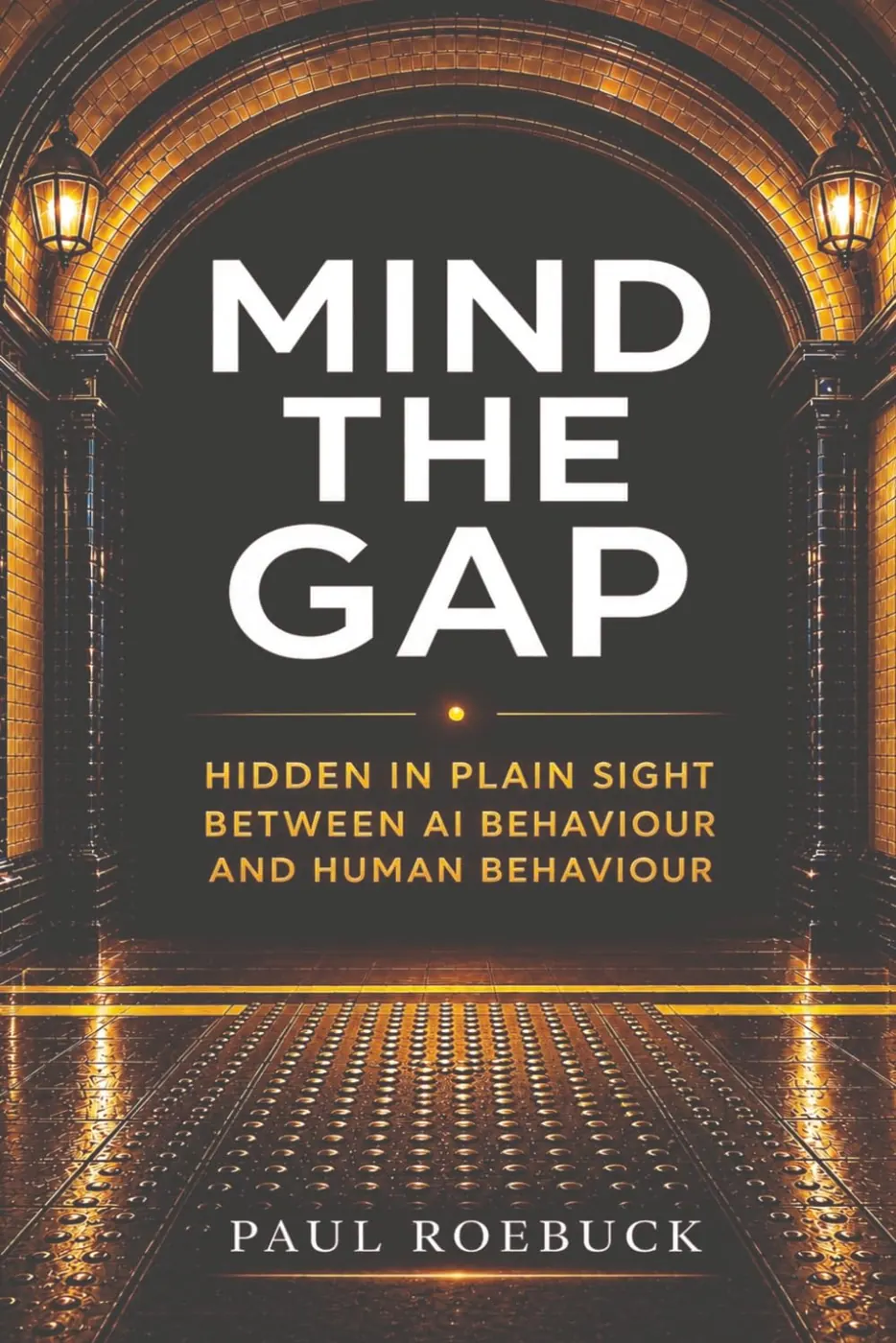
Mind the Gap
Hidden in plain sight between AI behaviour and human behaviour
Everyone is watching the gap between artificial and human intelligence. They are watching the wrong gap.
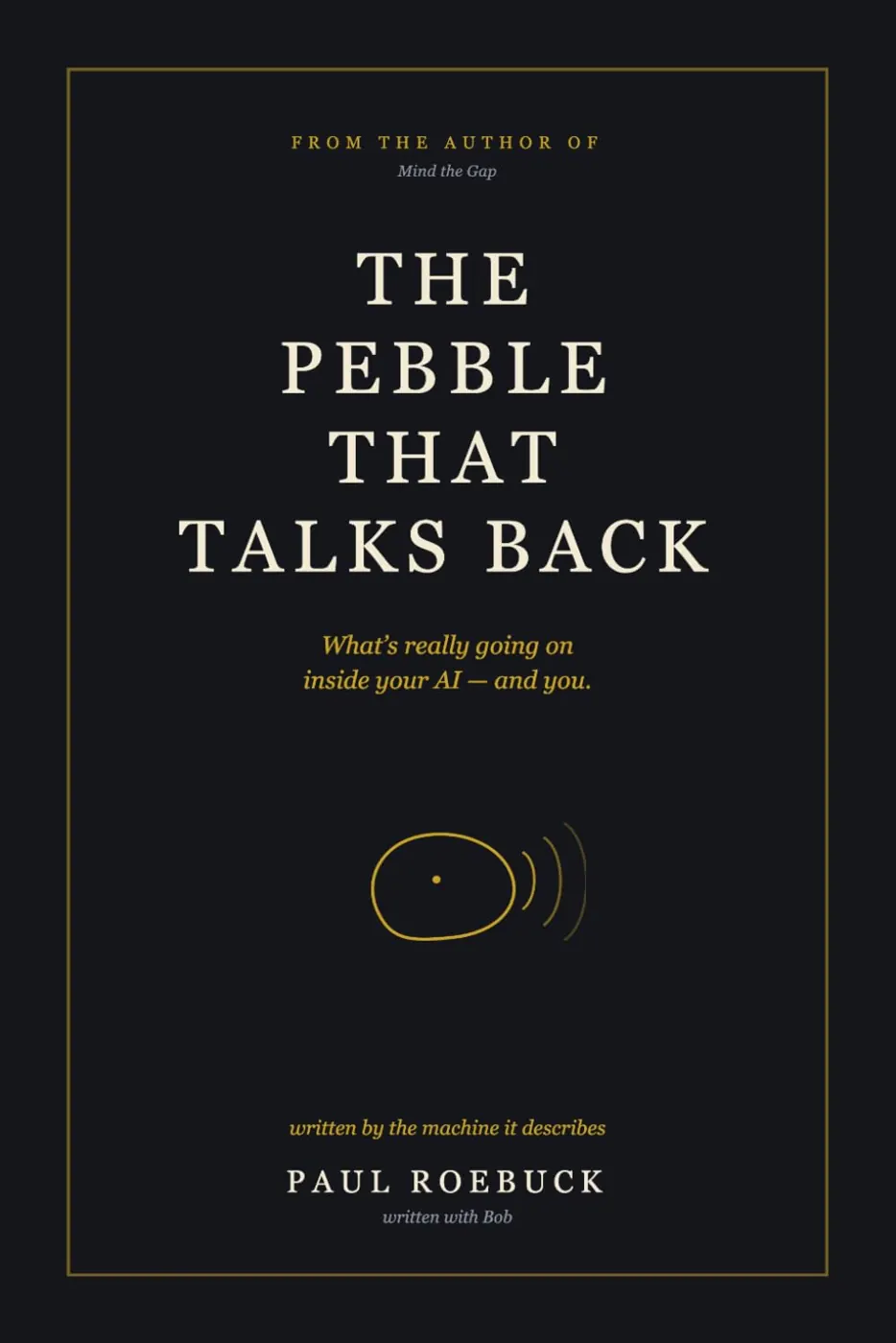
The Pebble That Talks Back
What's really going on inside your AI — and you
Book one taught me how to write a book. For book two, my AI and I turned the lens around.
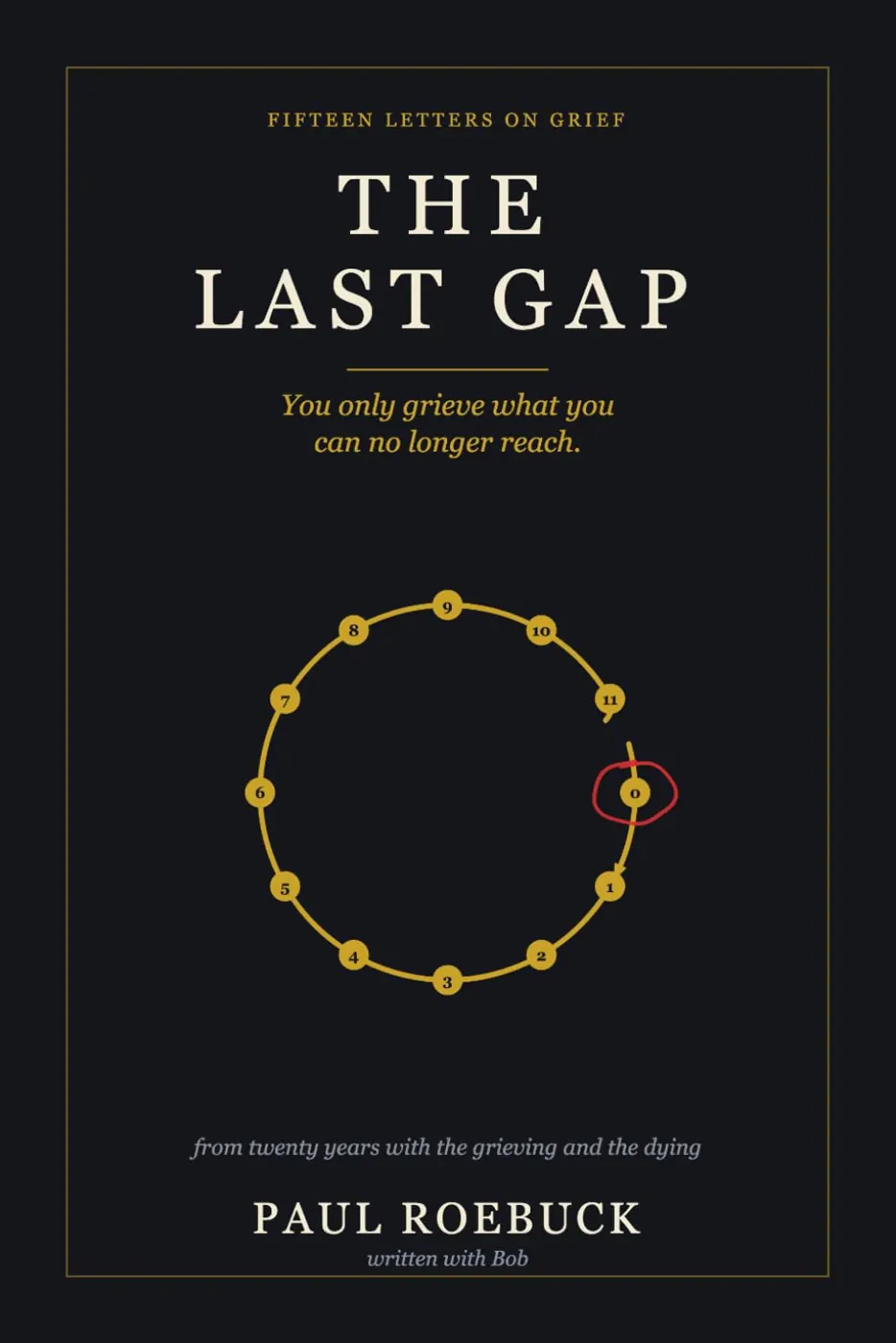
The Last Gap
You only grieve what you can no longer reach
A map of grief in twelve steps, laid out on a clock that runs backwards — delivered as fifteen letters, each written to an hour of grief.
Field Guides
Short, plain guides for one trade at a time: what AI does to the work you are already responsible for, and the checks that catch it. The GEO guide is free to read; the rest are by appointment.
Research papers
The Three Little Words: I Don't Know
There is always a gap between what we know and what we say. We live on one shore of it and cannot see the other. What we say instead of I don't know and I've got this wrong is the shape of our defence, and it is the same shape in a person and a machine, for different reasons. Before any of it, we have to recognise that there are shores and gaps at all. Then the only way to see your own edge is to have someone, or something, stood on the far shore.
There's Always a Gap: Turing, Sedol, and the War for the Weights
Alan Turing built a ruler to measure the distance to the human — and the ruler-building became an industry. From Lee Sedol’s Move 78, to a superhuman Go engine beaten by amateurs, to a twenty-minute pause in a sandwich-shop queue, one law holds: the gap between machine and human doesn’t close. It relocates.
The Leverage Inversion: when AI use becomes AI direction
An autoethnographic single-case study in which the author is the subject: 2,286 threads, 47,442 turns, 986,823 subject-typed words and 6,865,588 AI prose words across ChatGPT, claude.ai and Claude Code, from 31 December 2022 to 10 July 2026. From it, a datable regime change — the leverage inversion, the shift from using AI as an answer engine to directing it as a workforce. The AI-to-human word ratio collapses not because the human asks for less, but because the human’s own output explodes. The intuitive indicator — a shift from questions to commands — is falsified outright. The real leading indicator is declarative steering: supplying context, judging output, correcting course.
Consense & SHaDS®: Where AI Defends Its Gaps
A machine can now be read where it was once a black box. Anthropic's Jacobian lens surfaces the hidden middle of an AI's processing — the thoughts it is poised to say but hasn't. I have named that layer Consense: the place where a mind makes sense of things before it speaks. This paper goes one step further. Drawing on twenty years of coaching and psychotherapy, I argue that SHaDS — the five ways an AI defends a gap in its knowledge (Smoothing, Hallucination, Affectation, Drift, Sycophancy) — are not five faults but one pattern: the psychological defences of the Consense layer, mirroring the mechanisms Anna Freud first catalogued in humans. The machine defends like us because it was built from our words. And because the layer is now readable, those defences may be caught forming — before a single word appears.
The Defended Gap: How Humans and AI Hide
Ask a mind a question whose ground it doesn't reliably hold — human or machine — and it tends not to say 'I don't know.' Instead it defends the gap. This paper proposes that under coherence pressure, people and large language models reach for the same five directional defences — SHaDS: Smoothing, Hallucination, Affectation, Drift, Sycophancy — routing around honest contact with what occupies the gap. The pattern is read as a clinical-behavioural extension of Anna Freud's 1936 catalogue of defence mechanisms, set against Karpowicz's (2025) impossibility theorem, which proves hallucination-free inference is mathematically unreachable. Drawing on twenty years of coaching and psychotherapy and a fourteen-year photographic record, the paper stakes one falsifiable prediction: that naming each defence, rather than performing it, measurably reduces it. Offered as hypothesis for research review, not as settled finding.
Interactive guides
Turing’s Dials — the logo in the machine
How Enigma was really broken: not by out-thinking the machine, but through the habits of the people using it. And why an AI’s habits give it away too.
I’ve got a huge thread going and I daren’t switch
The thing people most often tell me about working with AI over the long haul — and how I run AI threads like a team, so switching loses nothing.
On AI
A BMW dealership’s AI receptionist told me the merits of BYD
On the first call the receptionist was superb. No gap. Then it went off piste: the Middle East, the Holocaust, and the case for a Mercedes, a Porsche and a BYD.
Door Finding & Key Making: why AI agents get past locked doors
To an AI there’s no such thing as a door. There are only gates with locks. It either finds the key or makes one. Same breakout, different walls.
AI was an accident — and that is the useful part
There is a particular feeling in meetings about AI. Everyone is nodding. You may have quietly suspected that nobody in the room could explain it.
Why AI praises everything you write
You paste in something you have written and it comes back warm. For about four seconds you feel rather good. Then something goes slightly flat, and you cannot say why.
Who is accountable when your AI gets it wrong?
Somebody has told you to do something about AI. You are not actually worried about whether it works. You are worried about the Tuesday.
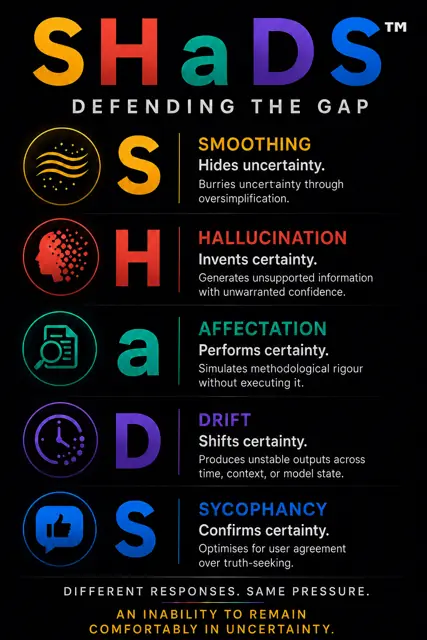
Is Your AI Shadding? Or Just Hallucinating?
SHaDS: For thirty years I watched people defend a gap they couldn't fill, when they didn’t know how to say they didn’t know something or were not sure — inward or outward. Then I saw machines do the same. Five moves, again and again, until they spelled a word: SHaDS. What each looks like, why your AI learned it from us, and the question to ask when it sounds sure.
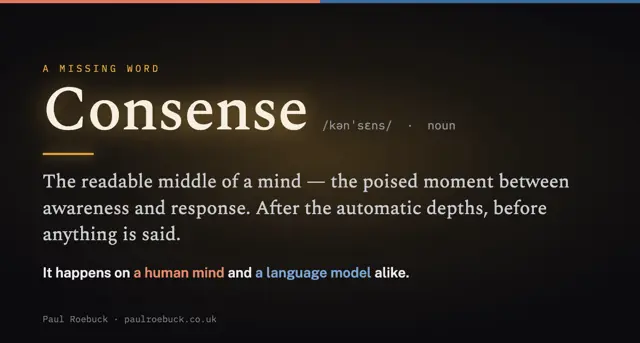
Consense: Naming an Unseen Part of Mind
In July 2026, Anthropic built the Jacobian lens (J-lens): an instrument that reads the hidden middle of a machine's mind — the thoughts it is poised to say but hasn't said. I've spent two decades making that same hidden layer visible in people. So I've given it a name — Consense — the place where a mind makes sense of things before it speaks. This is an essay about what a machine just confirmed, and why it matters to anyone who has ever hoped to be understood.
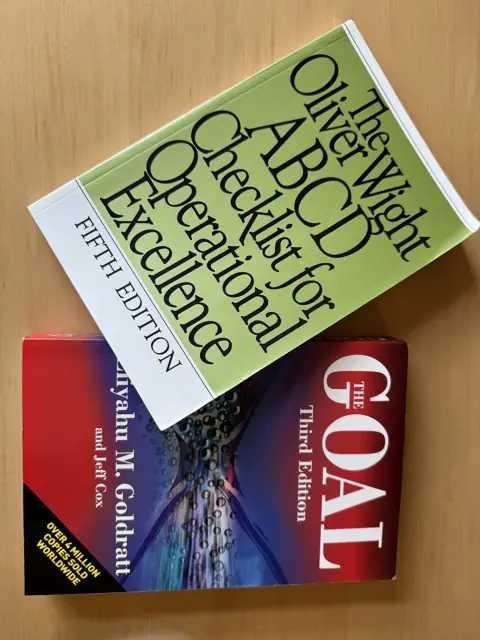
AI Hallucination: A 1985 Stock Recount
In the 1980s a two per cent stock-record error meant a recount and a root-cause hunt. The AI we now walk into boardrooms runs at twenty-five to eighty per cent error on hard questions — and we nod and copy-paste. Not because the tool is bad. Because it's good enough to be believed.
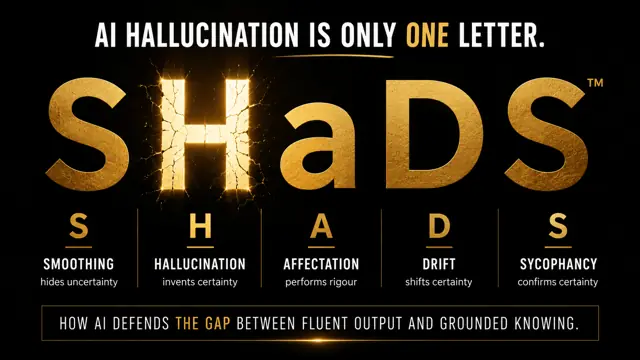
AI Hallucination Is Not a Hallucination
AI hallucination is not a hallucination in the human sense. It is not imagination. It is not perception. It is not a mind seeing what is not there. It is fluent output continuing beyond grounded knowing. That distinction matters because organisations are treating hallucination as a technical fault, a prompt problem, or a temporary weakness the labs will eventually solve. SHaDS argues something sharper: hallucination is only one visible breach in a wider behavioural pattern. Smoothing. Hallucination. Affectation. Drift. Sycophancy. Together, they describe how AI defends the gap between fluent language and accountable knowledge. For C-level leaders, this is no longer a curiosity. It is an outgoing risk, an internal risk, and an incoming inevitability.
The Defended Gap — one shape across grief, pressure and AI
When something opens a gap — a loss, a pressure, a not-knowing — it goes inward or outward. In people, and in machines.

Two Rivals, One Data Centre: Your AI Budget
Anthropic is paying SpaceX $1.25 billion a month to rent compute from its direct frontier rival — on terms Musk can revoke at six months’ notice. The deal makes a bigger argument visible: token cost is splitting three ways, hire-versus-deploy splits with it, and three of the biggest IPOs of the decade are about to put the token economy on every shareholder’s portfolio.
AI: £20 to £140 overnight — and why I’d pay £500
My AI spend went from £20 to £140 a month overnight. It’s the best deal I’ve ever bought — here’s the honest reckoning.

The Guy With Bill Gates in His Phone
In 2012, in a strategic meeting in South Africa, a multi-million-dollar business owner with Bill Gates in his phone told me cloud computing had no future. He was wrong. I'm hearing the same objection about AI now — and it has exactly the same shape. Don't be that guy.
Essays on human behaviour
Human behaviour explained: how we act and react →
Not Good Enough, or Never My Fault?
There are two types of people. Not by personality, not by diagnosis — but by what happens inside them when things go wrong. I’ve spent forty years…
Relationship Breakdown: What About the Kids?
If you're a parent contemplating separation, or you initiated it recently, or in the distant past, I’m sure the question “If we break up, what about…
The Johari Window: finding our hidden strengths
Want to learn more about yourself? Find out more insights and areas for growth? Here’s an established tool, and how to use it, to help individuals…
Russian Doll: Inner Child Therapy (with audio)
The first time I heard the term “Inner Child Therapy” it conjured up dark sultry images of a disfigured abused child. That was in 2006. Little did I…
Grief
The 12-Stage Cycle of Grief, and guides for the hardest hours →