Most people arrive able to describe the feeling but not the cause. That is the right place to start.

I see clients face to face in Oxhill, South Warwickshire, and by phone or video for people further afield.
I’m a psychotherapist and coach near Stratford-upon-Avon. A career in business, then coaching, and ten years in the psychotherapist’s chair. Confidential, without judgement, and aimed at what stops you doing things differently.
Where people start
Eight ways in. Find the one that sounds like you — they all lead to the same room.
Grief and bereavement
I don’t know where I am in this
Twelve stages, a clock that runs backwards, and no timetable anyone can hold you to. Twenty years with the grieving and the dying.
Trauma
Something still hurts when it’s pressed
A thing that happened — last year or forty years ago — and you still can’t go near it. You’ve told the story so often it’s stopped meaning anything, and it still lands in your body every time.
Anger
I don’t know where it comes from
It arrives faster than you can stop it, and it’s usually out of proportion to whatever set it off. Afterwards comes the shame, and the promise it won’t happen again.
Couples
We’re having the same argument on a loop
Different subject every time, same shape. One of you pushes, one withdraws. You both know your lines. Neither of you knows how to stop.
Psychosomatic
Every test came back clear and it still hurts
The gut, the back, the chest, the skin. Real symptoms, no medical cause found, and the quiet worry that someone thinks you’re making it up. You are not.
Identity and family story
The story I was told doesn’t add up
A test result, a date that doesn’t work, a relative nobody talks about. When the backstory you were raised on turns out to be partly invented, it moves the floor.
Executive and life coaching
I’m doing well and something is off
The role fits on paper. You’re competent, senior, and quietly running on something that isn’t working. Thirty years in business behind the chair, and a forensic eye for what people actually do.
Courses
Emotional resilience
Strength and conditioning for the mind, for businesses, groups and teams. Six short courses on where emotions come from — fear, anger, stress, anxiety, motivation — and how to handle them on purpose.
Death and the end of life
Anticipatory grief — grieving before the loss
There is a place people rarely get help with: the time before. You have had the diagnosis yourself, or someone you love has, and everyone around you is being encouraging. Meanwhile you are already losing them, or losing the life you expected, while they are still in the room.
This is grief — a particular kind of it. Anticipatory grief begins before the death, and it is lonely in a way the rest is not, because almost nobody will say it out loud with you while the person is still here. It is not disloyal, and you are not starting early. It is what the mind does when it can see what is coming.
I have spent twenty years with the dying as well as the grieving, and I have been the one holding the diagnosis too.
The book
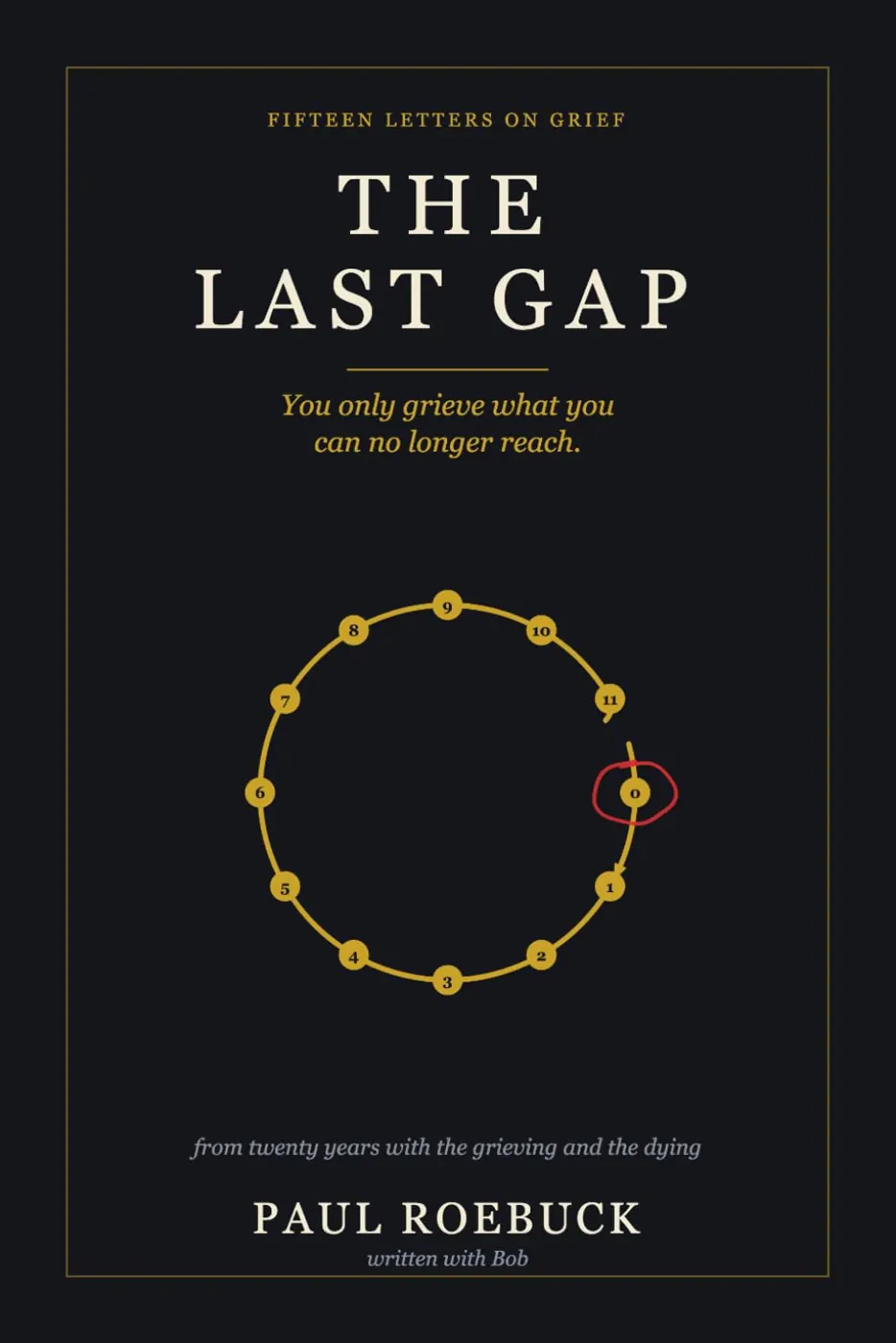
The Last Gap
Fifteen letters, one for each hour of grief, built on the 12-Stage Cycle. Written to be read at 3am.
What a first session is actually like
Two hours, face to face, in a quiet room in Oxhill with parking outside. No forms, no assessment, no clipboard. You talk, I listen, and somewhere in there I’ll ask the question nobody has asked you yet.
Why two hours, and not fifty minutes. Most therapists offer fifty minutes, and it can take that long for the cup of tea to settle. After twenty years of coaching and therapy I do not find an hour effective or efficient — it is usually just long enough to open something and not long enough to do anything with it. Two or three two-hour sessions is a faster road to a better outcome than a weekly hour for a year.
Further afield? One hour, by phone or video. It works better than people expect.
Tell me what’s going on, in a line or two. I read every message myself. If a call is easier, say which days suit and I’ll ring you.
Trauma
Trauma therapy
Trauma comes in many forms. If you’ve found this page, you don’t need me to tell you that.
Trauma always leaves an emotional scar, although in some cases it’s more of a bruise, and in other cases, it’s a physical, mental or emotional limitation.
It’s because an event, recent or historic, activated an acute emotional response, and pressing the bruise still hurts.
There are treatments for this, whether it’s aged or recent pain. Effective, compassionate, and proven methods that materially help you to come to terms with painfully difficult times and healthily move on to brighter, more settled ones.
I have extensive experience helping clients to adapt to the physical, mental, and emotional consequences of trauma and assure you of complete confidentiality, sensitivity, and absolutely no judgement.
So if you know there’s a wound that needs healing, get in touch.
Not all trauma is acute, but all trauma hurts.
Anger
Anger relief & release
Anyone can become angry; that’s easy. Being angry with the right person, to the right degree, at the right time and for the right reason is hard.
We’ve all been on the giving and receiving end of anger. It’s a normal and healthy emotion.
Until it isn’t.
There are times when anger is proportional and appropriate. Questioning a BMW driver’s parentage at a roundabout is anger, but it’s in proportion.
Kicking the radiator off the wall because someone drank the last can of Coke is anger out of all proportion.
I call that “aged” anger. Anger at something else, often from the past, left unexpressed until it has grown and grown.
If you or others are prone to outbursts of anger it’s because there’s a little (or a lot) inside of you that’s been hurt, and that pain feeds your anger.
It could be hurt physically, mentally, and emotionally, or just judged, unjustly. Whatever its source, it’s the fuel for anger.
Many people find releasing that old pain lighter and quicker than they feared — for them, and for those who live with it.
If you, or someone you know, could benefit from a conversation, get in touch.
If anyone at home is frightened of you, the Respect Phoneline offers free, confidential advice on 0808 802 4040.
Couples
For advice on how to conduct yourself in a relationship, Relate is a better place to start. I don’t judge what’s right or wrong in a marriage; that isn’t my role.
I can help a couple explore what’s working and not working in the relationship, and how small but significant changes in the behaviour of one or both parties can bring peace, strength, maturity, and longevity.
My approach is to meet the two together for the first session to pinpoint and illuminate what’s not working, then more often than not to meet each of you individually, for two or, at most, three sessions to work through what the first session uncovers, then after that a further session together to see how things have developed.
The biggest difficulty I see with couples is that they leave it too long to seek support, so if you are reading this for the first time then I’d recommend acting now, and not postponing things until they reach an irreversible conclusion.
Psychosomatic
Psychosomatic reactions
Psychosomatic means when the body starts doing things the mind doesn’t understand.
And because it’s physical we first seek clinical and medical help.
The surgeon who developed a twitch, the pianist whose thumbs froze, the speaker who developed a stammer.
The clue is in the name: “psycho” means “of the mind”, so it’s best met with talking therapy.
I’ve had some powerful experiences pinpointing the cause and helping clients move on.
If you suspect your, or a loved one’s physical ability is being affected by their emotional state, get in touch.
Genealogy & identity
Genealogy gaps & identity misinformation
If you’re one of those people characterised in the popular TV show Long Lost Family, I do provide support.
I call it parental misinformation: your backstory from birth doesn’t stack up.
It’s also suitable for those adapting to the search for answers as much as it is for those who’ve found the answers.
Many people have gaps or quirks in their life story and it’s profoundly disturbing at an inexplicable level.
There may not be answers. But there are questions. All too often we can’t “ask” about our past because it’s a taboo subject with others or there’s no one to ask.
So come and ask your questions. Ask them confidentially, sensitively and compassionately.
Many people find it deeply settling.
Please get in touch.
If you are thinking about ending your life, call Samaritans free, any time, on 116 123.
Life and executive coaching
What is Paul’s coaching style?
An unusual combination of warmth and directness, which he uses to help people either uncover what is really going on or, where necessary, confront issues they may be unaware of or have been avoiding.
A managing director
How is Paul unique?
Thirty years working around the world in hundreds of businesses is the foundation. Add a forensic understanding of people and why they act the way they do, and you have a coach who sees the pattern before the person can name it.
A diverse and expansive career
From the factory floor to the board room: operations and production management, sales, marketing and IT, in over thirty locations around the world.
After seven years of true dedication and determination, Paul Roebuck has decided to move on. We will all miss Paul’s enthusiasm, motivation and sharp analytical mind, which he applied systematically to the whole company — first in a business improvement role, then as Operations Director, and for the last four years as Sales and Marketing Director.
K3 Business Technologies
Emotional resilience
Strength and conditioning for the mind, for businesses, groups and teams. Most of us get little or no emotional education, then feel confused or disempowered by our own emotions or other people’s. This is the opposite: learning where emotions come from — fear, anger, stress, anxiety, motivation — and how to handle them on purpose.
The courses
Repeating Patterns
Madness, as the saying goes, is repeating the same pattern and expecting a different result — a line usually put in Einstein’s mouth, though there is no evidence he said it. The neuroscience of why we repeat patterns even when they hurt us — and what it takes to change one.
I Believe Me
“Whether you believe you can or believe you can’t, you’re probably right.” We adopt beliefs without noticing. Some keep us safe. Some quietly run the whole show.
Self Awareness
The foundation course. How malleable the mind is, how fast we make choices, and how easily we influence others and are influenced ourselves.
Power and Rank
How we rank things, and especially how we rank ourselves. Where you give your power away, and what it takes to get it back.
Perceptual Positions
If I am I because you are you, then I am not I. A hard sentence that turns out to describe exactly how we act and react around other people.
Attachment, Attention and Avoidance
We attach to a pet, a phone, a person. What drives it, what it costs, and whether it can be changed.